Raised beds
An independent guide to watering with clay ollas

Bury an unglazed clay olla beside your plants and fill it. Water seeps through the clay slowly, right where the roots are.
Affiliate link to Relaxdays. We may earn a commission.
Watering from above asks you to guess what is happening underground.
The top of the bed is dry by afternoon, and you cannot tell whether the roots are too.
Pots on a sunny patio need water again before the next watering day comes round.
Water from the hose runs off or sits on the surface instead of soaking down.
An olla moves the watering below the surface, beside the roots.
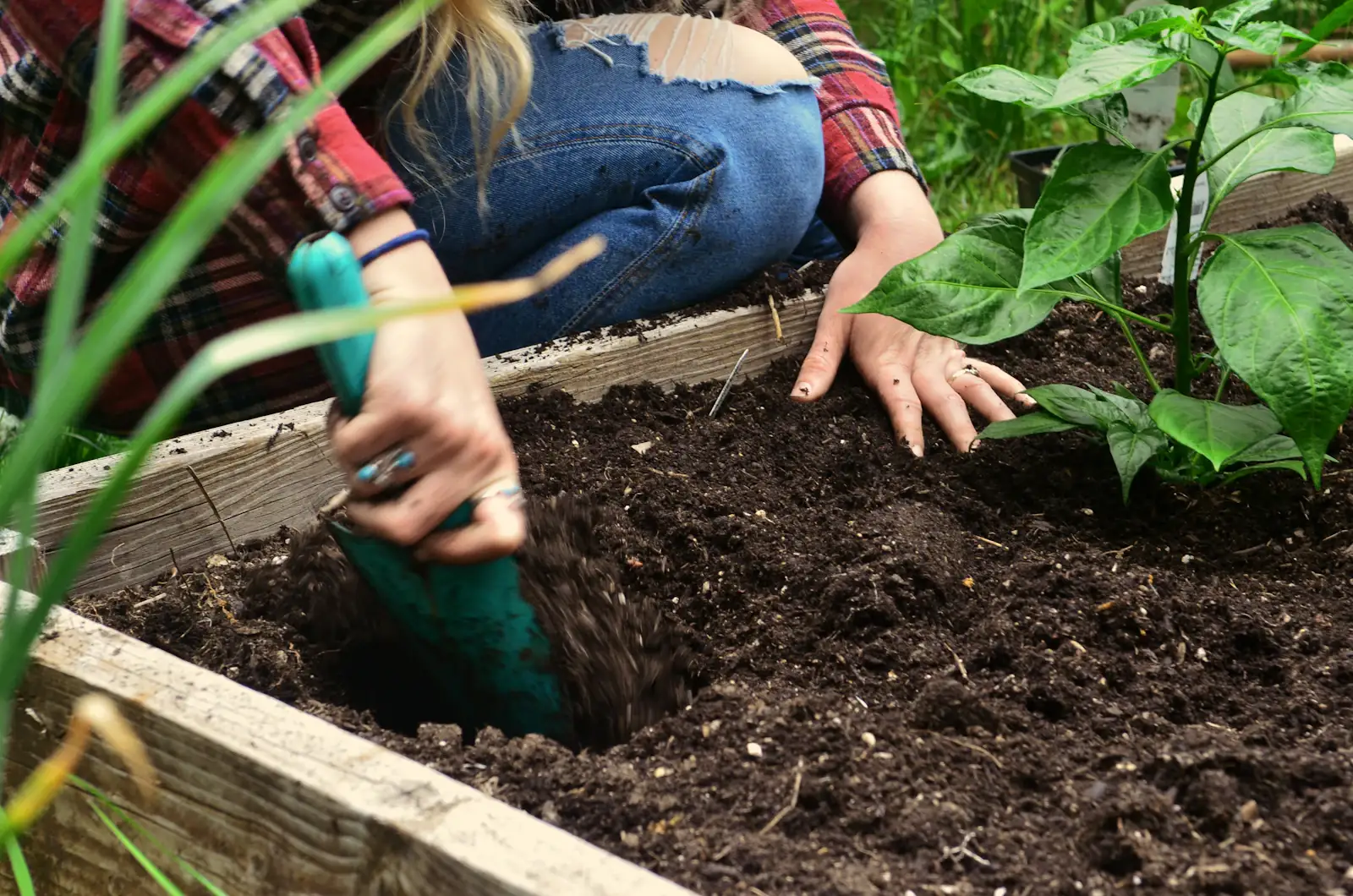
Dig it in beside your plants with the neck 2–3 cm above the soil. Backfill firmly so the clay touches soil all round.
Pour water through the neck until it is full and fit the lid, which keeps out mosquitoes, slugs and leaf litter.
Dry soil pulls water through the porous clay. When the soil is already moist, the flow slows by itself.
The plants are the same. The way the water reaches them is not.
Pick an olla by the space it has to water. Sandy soil, full sun and big plants empty it faster. For a worked layout, see how to space ollas in a raised bed.
Rule of thumb: the moist zone reaches about one olla-height out from the clay wall.
| Olla capacity | Suits | Moist zone, approx. | Refill, mild weather | Refill, summer heat |
|---|---|---|---|---|
| 0.3–0.5 L | Window boxes, mid-size pots | 20–25 cm across | Every 3–4 days | Daily |
| 1 L | One 20 L+ pot, or 30–40 cm of bed | 35–45 cm across | Every 3–5 days | Daily to every 2 days |
| 2–3 L | Half-barrel, or a 60 cm square of bed | 50–60 cm across | About weekly | Every 2–3 days |
| 5–6 L | Centre of a wide raised bed | 80–90 cm across | Every 1–2 weeks | Every 3–5 days |
Short articles on layouts, containers, clay care and the seasons.
For seedlings and fresh transplants, yes, until their roots reach the olla, usually after two to three weeks. Established plants can rely mostly on the olla, with an occasional surface soak in very hot spells.
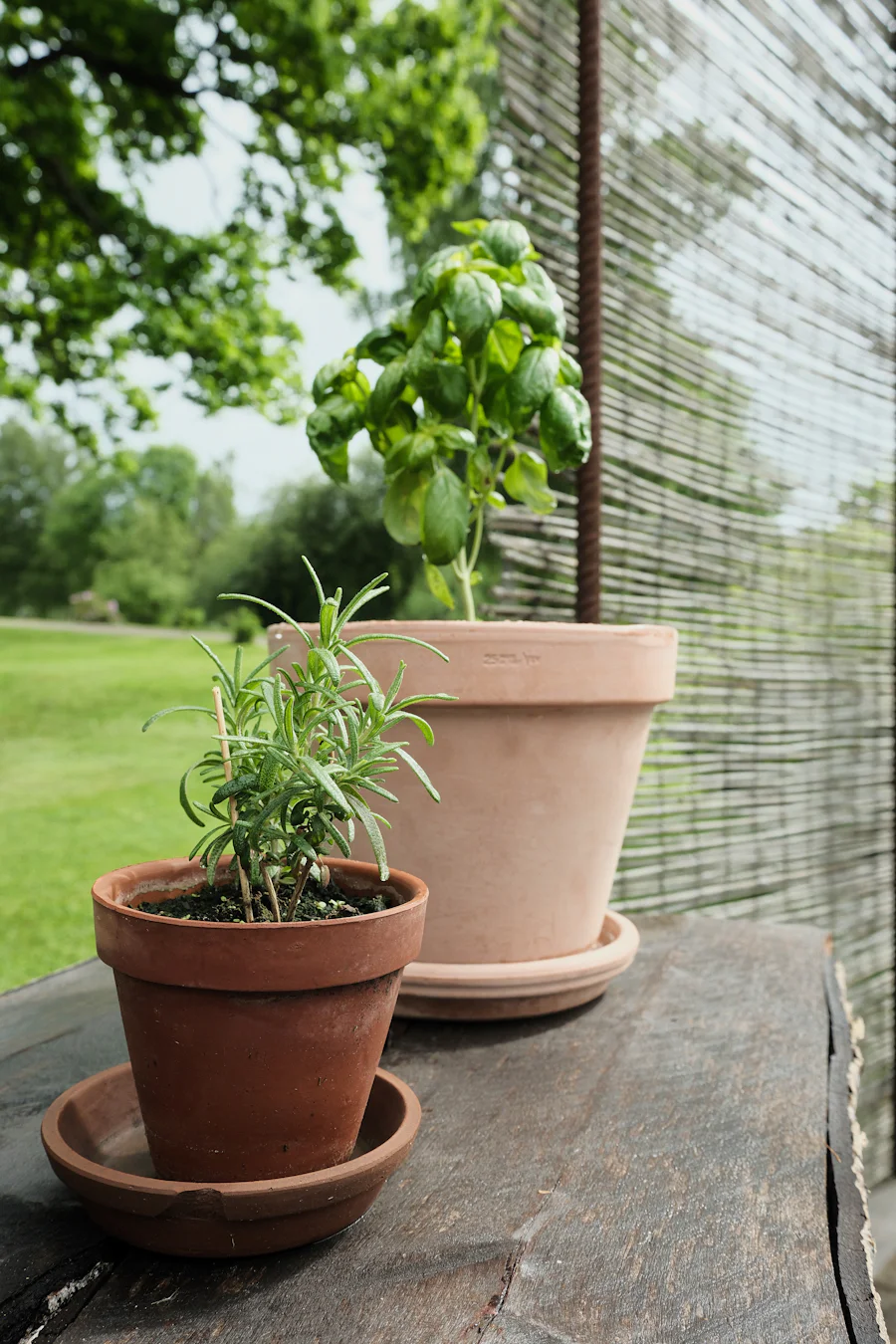
Yes. Choose a container deep enough to bury the olla up to its neck with soil all around it. Roughly 20 litres or more gives a 1-litre olla room. For herbs, see watering herbs in terracotta pots.
Either the soil around it is already moist, which is normal, or the pores are clogged with minerals or algae. Lift it, scrub the outside with a stiff brush and water, let it dry, and reinstall it.
Better not. Fertiliser salts can build up in the clay and slow the flow. Keep plain water in the olla and feed the soil or the plants separately.
Empty them before freezing weather, because water left inside can freeze, expand and crack the clay. The steps are in how to clean and store ollas for winter.
Still unsure about something? Send us your question.
Pick a size from the guide, set it in before planting, and fill it once the soil has settled.
See the olla setOpens the official Relaxdays website in a new tab. We may earn a commission if you buy.