Watering herbs in terracotta pots
Terracotta pots lose water through their walls, so compost dries fast. Group herbs by thirst, water thoroughly and add a small olla only in larger pots.
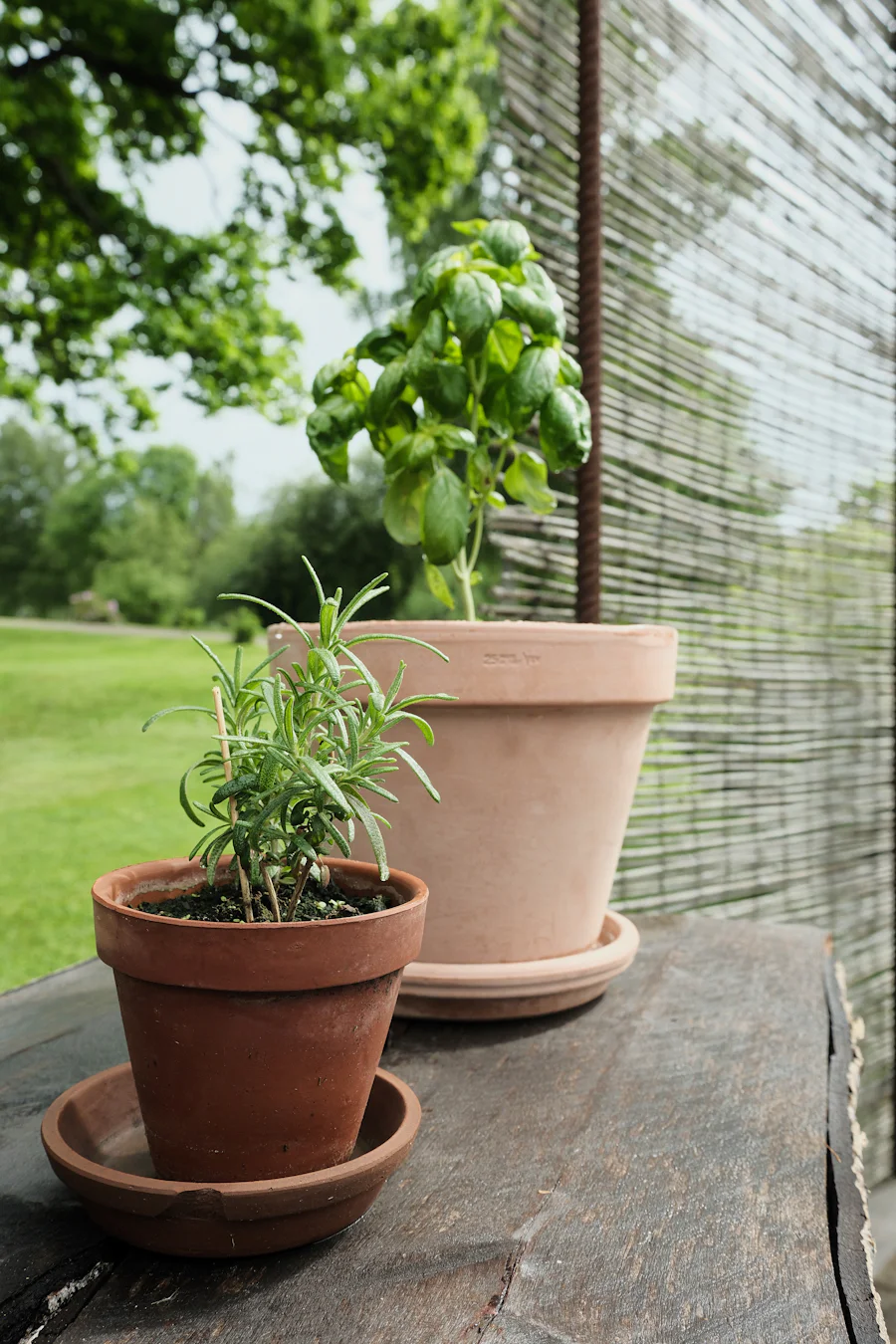
Herbs in terracotta pots dry out faster than many new gardeners expect. Water escapes through the clay wall, sun warms the pot, and a small volume of compost holds little in reserve. Watering herbs in terracotta pots on a steady routine, with a small olla in the larger pots, keeps them from swinging between soggy and parched.
Why terracotta pots dry quickly
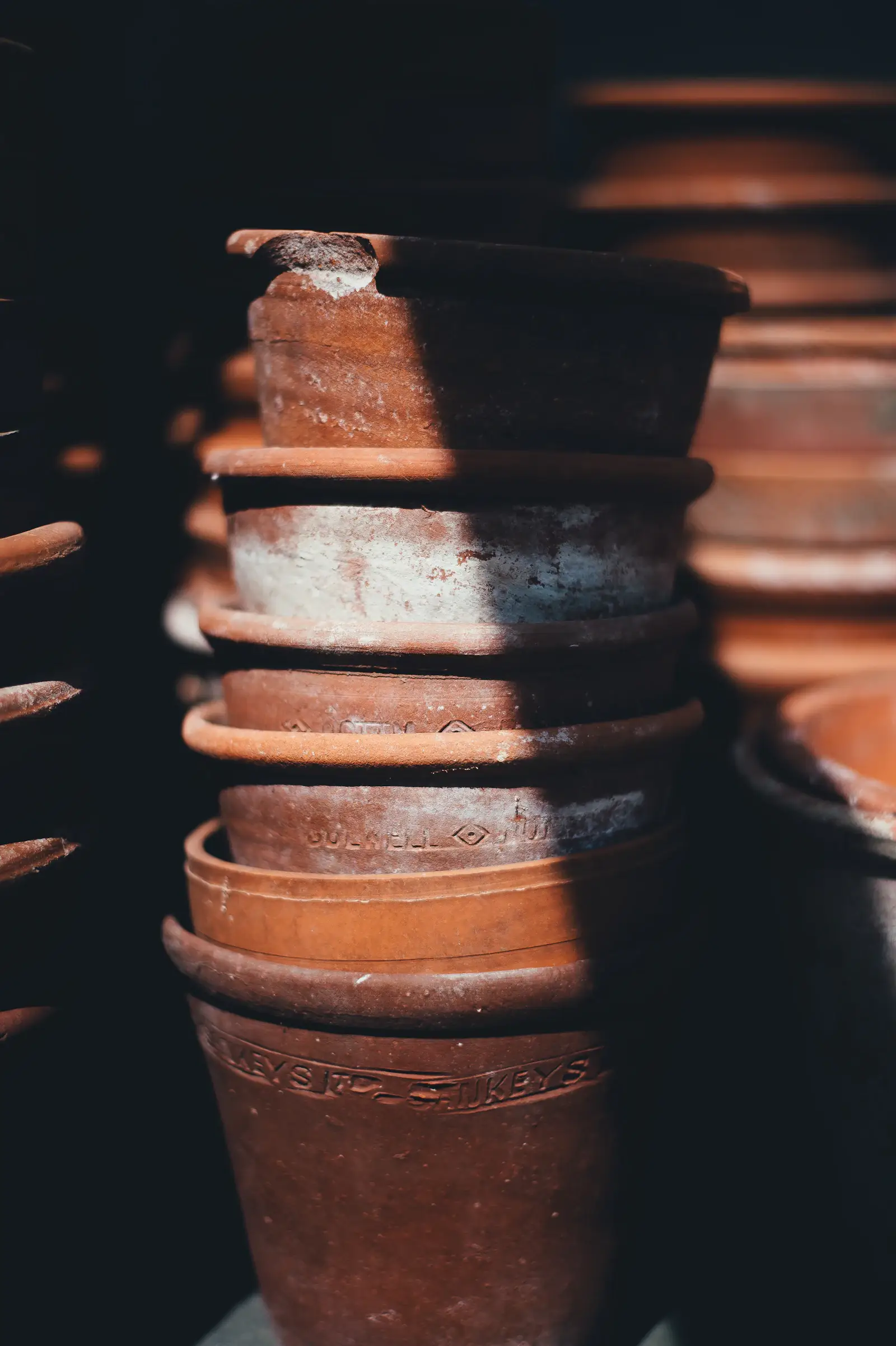
Unglazed terracotta is porous. Water moves out through the pot wall and evaporates from its outer surface, which is why a clay pot often feels cool to the touch. That keeps roots aerated, but it also means compost in a clay pot loses moisture faster than the same compost in a plastic or glazed container.
- Small pots (under 15 cm across) can dry out within a day in warm, windy weather.
- Pots on hot paving or against a sunny wall dry faster than pots standing on soil or gravel.
- Root-bound herbs drink more and hold less, because roots have replaced much of the compost.
Group herbs by thirst
Herbs differ a lot in how much water they want. If you mix thirsty and drought-tolerant herbs in one pot, any watering routine ends up as a compromise.
Prefer evenly moist compost
Basil, parsley, chives, coriander and mint grow best when the compost never fully dries out. These are the herbs that gain most from a small olla in a larger pot or trough.
Prefer to dry between waterings
Rosemary, thyme, sage and oregano come from dry, stony habitats. They usually do better with a thorough drink followed by a few days of drying. Keep them in their own pots, ideally with grit mixed into the compost, and leave ollas out of these containers.
A weekly watering routine for herb pots
- Check daily in summer by pushing a finger into the compost. Water thirsty herbs when the top 2–3 cm feels dry, and Mediterranean herbs only when it is dry deeper down.
- Water thoroughly. Pour slowly until water runs from the drainage hole, then stop; a splash on the surface only wets the top layer.
- Empty the saucers after half an hour so roots do not sit in standing water.
- Water in the morning, so plants have a supply before the heat of the day.
- Refill ollas on the same day each time. It is easier to remember, and you soon learn how fast each one empties.
Using ollas in herb containers
A small olla of around 0.3–0.5 litres suits window boxes and troughs. A 1-litre olla needs a container of roughly 20 litres or more so it can be buried to its neck with soil all around. Bury it in the middle, plant herbs in a ring and keep the lid on. In very small pots an olla takes up too much root space, and regular hand watering is simpler.
Both the terracotta pot and the olla lose water through their walls. In a clay pot, an olla stretches the time between waterings, but you still need to check the compost.
Small changes that help
- Move pots together; grouped containers shade each other and dry more slowly.
- Add a thin layer of gravel or bark on top of the compost to cut surface evaporation.
- Repot herbs that wilt within hours of watering into a container one size larger.
- Soak a very dry pot in a bucket for 20 minutes if water runs straight through.
Where to go next
If you decide to try an olla in a herb trough, the olla sizing guide lists which capacities suit window boxes and mid-size pots. Thinking of turning an old clay pot into an olla? Run the four porous clay checks first. The Relaxdays olla set featured on this site is one ready-made choice; compare its capacity with the size of your containers before buying.